Episode Overview
At the CMO Huddles SuperHuddle in Palo Alto, I sat down with Sandy Ono, Chief Marketing Officer and Executive Vice President of Marketing and Partnerships at OpenText, to explore how her dual leadership role across marketing and partnerships is reshaping how the $5.5B software company goes to market.
OpenText has been a trusted name in enterprise information management for decades. But as Sandy shares, the company has evolved far beyond its content management roots - now spanning cloud, cybersecurity, and AI-driven solutions across 10 categories. Through that growth, one thing has remained consistent: a deep commitment to partnerships.
Inside Partnering is a reader-supported publication. To receive new posts and support my work, consider becoming a free or paid subscriber.
“About 40% of our business runs through partners,” Sandy explains. “We think about our partnerships in five big segments - strategic partners, GSIs, cloud providers, resellers, and managed service providers. Each has a distinct motion, but all are aligned to growth.”
At the top of that list sits SAP, a partnership that dates back more than 20 years. “We’ve been a Pinnacle Partner for 19 of those,” Sandy says proudly. “SAP focuses on structured data - ERP, HR, finance - and OpenText complements that by managing the unstructured content behind those processes. Together, we help customers move to the cloud more efficiently while maintaining compliance and governance.”
That combination - structure and context - has become even more vital in the age of AI.
“AI is only as good as the data foundation beneath it,” Sandy notes. “We always say, strong data foundation leads to strong AI outcomes. We’ve spent 35 years governing the humans - now we need to govern the agents.”
It’s a philosophy that ties directly into OpenText’s mission of secure information management for AI. As organizations rush to integrate generative tools into their workflows, OpenText’s platform provides the trust layer needed to ensure AI outputs are governed, auditable, and aligned with enterprise standards.
Marketing and Partnerships: Two Sides of Growth
Sandy’s path to leading both marketing and partnerships wasn’t a deliberate pivot - it was a natural evolution. “I’m a marketing geek,” she says with a smile. “What I love most about marketing is crafting strategy and bringing it to market. Partnerships take that one step further - when you form great alliances, the growth is tangible. The revenue comes.”
That synergy between brand, go-to-market, and partnership execution has become one of OpenText’s strongest advantages.
“You can have a wonderful partnership and negotiate the best deal,” Sandy explains, “but unless you bring your marketing friends along, it doesn’t come to life. Marketing and alliances are two sides of the same growth engine.”
It’s also about relevance - to both customers and partners. “A lot of partnerships are sell-through models,” she says. “Your relevance is not just to the end customer but to the partner’s sales organization. You’re enabling your own sellers and your partner’s sellers - and both have to understand your joint value proposition.”
Partnering Through Deep Integration
OpenText’s new partnerships with Guidewire and Fiserv are prime examples of how the company is tailoring its strategy for industry-specific impact.
“If you’re an insurance company using Guidewire,” Sandy says, “you want to stay in your application, not bounce around. But you still need a single source of truth, seamless workflow, and strong content management. That’s what OpenText brings to the table.”
These kinds of embedded partnerships - where technology is built directly into the customer’s workflow - create “stickiness” that drives long-term value. “They take years,” Sandy admits. “You have to engineer together, go to market together, and stay relevant to the customer base. But when you get it right, it’s incredibly powerful.”
Shared KPIs, Shared Accountability
To make these partnerships thrive, Sandy emphasizes the importance of shared metrics across marketing, partnerships, and sales.
“Pipeline generation is the name of the game,” she says. “We’re clear about accountability across the teams - who sourced what, who influenced what. Once you build that muscle, you can stop counting every little thing and focus on the outcome.”
That accountability extends to partner enablement as well. “Your partner sellers need to understand your value proposition. The first question they’ll ask is, ‘why aren’t you competitive with me?’ Once they trust you, they want to know how your product fits in their stack, and whether it’s certified and supported.”
That progression - from trust to integration to shared success - mirrors the same funnel marketers know well. “At the end of the day,” Sandy says, “we’re all working toward customer trust. And that takes alignment across every part of the go-to-market engine.”
The Future of Partner-Driven Marketing
As OpenText leans further into AI, Sandy sees an even greater need for alignment between marketing, partnerships, and technology leadership. “Customers need to trust the systems, the data, and the outcomes,” she says. “And the best way to do that is through partnerships that bring complementary strengths together.”
It’s a powerful reminder that in the age of AI, no company goes to market alone.
Podcast
Guest
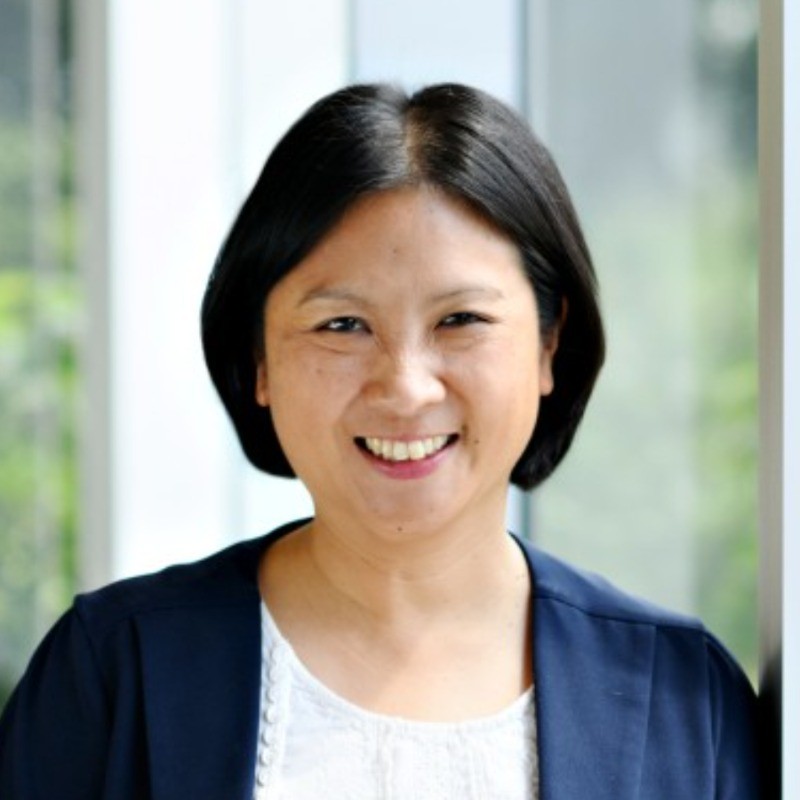
Sandy Ono
I focus on leading Go-to-Market strategy and operations to maximize customer value and business growth in the high-tech industry. With 20+ years of experience in marketing and sales effectiveness, my experiences range from customer analytics, digital marketing, marketing organizational transformations, eCommerce, to branding and launching new business divisions.

Episode Transcript
Sandy Ono
===
Sandy Ono: [00:00:00] So with a lot of our large strategic partners, we get into fly zone here. No fly zone here, right?
And you can do that at the partnership level, but when it gets down to the seller, question one is why are you not competitive with, what am I supposed to sell that's from our own company?
Chip Rodgers: Why am I gonna bring you in?
Sandy Ono: Yeah. Two. Okay. Now I think I trust you. I understand your value pop, what's in it when you are playing with the rest of my stack.
Enterprise sellers are sophisticated, customer relationships are deep. They don't wanna mess it up either. If they bring you in, they wanna make sure it works,
Chip Rodgers: hey everyone, Chip Rodgers with Inside Partnering and we are here in Palo Alto at the CMO Huddles Super Huddle here on Thursday evening and it's fantastic.
A whole bunch of CMOs all here.
Sandy Ono: Hi everybody, I am Sandy Ono. Chip thanks so much for having me today.
Chip Rodgers: Yeah, fantastic. I'm so excited to be joined by Sandy Ono. And Sandy is CMO for OpenText. And Sandy, that's quite a big [00:01:00] job. You've been with OpenText for about six years, I think.
Four years. Yeah, four years. Yeah. Yeah. And prior to that with HPE and. Always in marketing roles and here now you're CMO at OpenText. And so welcome.
Sandy Ono: Thanks so much for having me. Like you said, I've had a fun career in marketing but at OpenText I get to have the pleasure of driving both global marketing but also partners in alliances, which is a really fun part of my job.
Chip Rodgers: So I think that's really cool. So you've been doing that for, you have a long history in marketing, but for the last three years. You've been leading partnerships as well, and OpenText is huge with partner. So many different kinds of partners. Why don't we start there and talk a little bit about, a lot of our audiences are partner leaders and so they're always interested in different careers and how people think about, partnerships.
And so maybe start with a little bit of the landscape of OpenText and how you guys partner.
Sandy Ono: Sure. So OpenText is about a five and a half billion dollar software company. We focus on secure information [00:02:00] management for ai and partner resells about 40% of our business. So quite a big significant part.
And we think about our partnerships in five big segments. We have our strategic partnerships. Our biggest, deepest partnership is with SAP so happy to chat a little bit more about that, but deeply integrated with our SAP partnership there. Then we have global system integrators as a segment.
We have cloud. Cloud service providers as a segment. We have resellers and distributors as a segment. And then more and more kind of crosses a couple different but managed service providers. So those are our five segments of partnerships. That's how we kind of align ourselves. We are a partner sales organization, so while we have field sales that are organized by our product areas the partnerships are absolutely aligned by our segment areas because that's how we can drive significant programs and growth.
Chip Rodgers: That's terrific. And I was actually with SAP for 13 years, and so I know the OpenText relationship through the endorsed apps and the, that program has al the OpenText SAP [00:03:00] relationship has always been really strong.
Sandy Ono: Yeah. So the open SSAP relationship dates back, gosh, more than 20 years.
We've been a pinnacle partner for the last 19. And it really roots in this. SAP has a phenomenal practice in ERP and HR applications all around structured data. And what opend does is helps with the unstructured content management behind HR processes, finance processes, and the two together is quite powerful.
And especially as customers been moving to the cloud, they need to be able to move the cloud more cheaply and more effectively so that how they archive it, how they store their information, and how we partner together to actually deliver things now and AI is gonna be tremendously important.
Chip Rodgers: That's amazing.
And I think OpenText has, you've always been in content and really, understanding how to manage data and complex data. And now with ai it's just right in your sweet spot.
Sandy Ono: Yeah, it certainly is. We always think about information management as having kind of three types of data and content.
There's human created content. And more and more you and I are [00:04:00] taking pictures on our phones. There's a lot of unstructured voice messages. So that vast array of human created content is one type of content we manage. Another type is just kind of machine created content, right? So think about it, service logs or security logs, all these things that are generated by it.
And then there is content that goes between two companies, so commerce, business networks, and trade. And the truth is. AI actually needs all three types in order to be accurate, effective. And a lot of the conversation nowadays has been around contextual ai. And we know that as we help companies manage that data foundation, we're gonna be able to help empower their AI as well.
Chip Rodgers: Yeah, I think that's really important. And I've heard, I've seen you talk about the importance of, data like AI is no good unless you have really good quality data behind it.
Sandy Ono: Yeah, absolutely. We always say strong data foundation leads to strong AI outcomes. And more and more we know that, AI with its best intentions will hallucinate.
So how do we [00:05:00] really help to govern what's around that? We have a running joke with my CPO. He's we spent 35 years governing the humans, so we should probably create some governance for the agents and will allowing us to be able to help our customers do that, right? Because we all want the outcome, which is that truly automated.
Let's remove a workflow. But until we can really all trust the results. That's where enterprise AI is and yeah.
Chip Rodgers: Yeah. So Sandy, I'm really curious about your career progression and it's really interesting because of your, such a strong marketing background and now leading partnerships as well.
How is that sort of, how was that, making, it's not really a transition, but it's just like. Learning the whole space around partnerships. And then I'm also wondering about how you've been able to pull those organizations together because they all come together under you.
Sandy Ono: Yeah, that's a great question. I'm a marketing geek, so I love the marketing aspects of creative, bringing things to market. But I love most about marketing is that you're a go to market [00:06:00] specialist at the end of the day, you know how to craft a strategy and then bring the power of marketing to market.
Now what I love about partnerships and alliances is that it's tangible. When you form great alliances and great partnerships, the revenue will come for your company and the growth will come. And I've had the pleasure of learning a lot on the partner space and now really seeing how the two come together because you can have a wonderful partnership that you go land and you construct the best deal and you know it's there.
But unless you have your marketing friends with you, the go-to market motion doesn't actually come to life. So the two compliment each other greatly in helping to drive growth through the company. And now it's so fascinating in tech and why all the various alliances are just the right place at the right time.
Is, think about it, everybody's playing in some aspect of ai. Are you at the application layer? Are you at the infra layer? Are you at the, telco layer and how we partner will actually solve for the problem for the customers better? Customers need to know how to do [00:07:00] this and to trust it. And the more the tech players can actually figure out how the agents are gonna talk to the agents and how you're gonna have audit trails and how that technology's actually gonna work together, it's gonna help be able to solve better customer problems.
Chip Rodgers: And I think that's really, that's, partnering is so important that way. And I, and it actually makes me think of the, you recently announced a partnership with Guidewire. And that's really interesting because you both bring different technologies, complimentary technologies to, to, to the market together focusing on the insurance industry.
So talk a little bit about that maybe as a model for how OpenText thinks about partnering.
Sandy Ono: Yeah, sure. We think about partnerships as we think about new business development. And I like to think about, whether there's partnerships where light integration, your APIs talk to each other and that's a seamless great experience for your customers. Then we have deep integrations like OpenText does with SAP which is like the user inter the user experience is quite integrated and the data elements are quite integrated. And then with [00:08:00] Guidewire, we also announced a partnership with Fiserv. We're trying to be more specific for what we can do for our customers,
Chip Rodgers: right?
In specific industries,
Sandy Ono: specific industry. If you're insurance, you are in your Guidewire app. You don't wanna be bouncing around, but you need a single source of truth. Be able to have. Seamless workflow, be able to process a claims loan to be able to get through your workflow, and that's what OpenText compliments with.
Same thing if you were in Fiserv and you're doing your banking, mobile banking online. You want your checks to show up. You wanna be able to process what you do in your bank. You need strong content management behind that. So a lot of these partnership is actually just powering the new user experience that can go through the industry oriented applications that people are in every day.
Chip Rodgers: I really love that because I think that's also in fact, I just posted something earlier today about a visa a partnership that was just announced recently, and it's exactly that They're building the technology right into the workflow within a specific industry.
Sandy Ono: Yeah. And you know what? You
Chip Rodgers: very sticky.
Sandy Ono: It's very sticky. So it's a [00:09:00] great way to form a partnership, but these partnerships take multiple years. And to be able to say, okay, how are we gonna engineer our products together? How are we really gonna bring it to market together? How do we really be relevant to that customer base? So it's been fascinating and fun to work on these together with our partners because we know we're creating that next thing that our customers need when we can put the powers of our two companies together.
Chip Rodgers: That's terrific. So let's talk a little bit about the 'cause I've all, I've read that you put some. Some some KPIs and some structure in place between the partnership and the marketing organization to make sure that everybody's looking at the, and probably sales as well, to make sure everybody's looking at the same numbers, right?
Sandy Ono: Oh, yeah. Pipeline generation is the name of the game. And there is no shy metrics in my organization, but we're pretty clear upfront around kind of accountability. So between sales, the partner team and the marketing team, how we, go in and say how much is sourced by each aspect?
But what I found also is that once you establish that and you get that muscle [00:10:00] going and there's accountability, then you can really get to the, okay, stop counting. Exactly. This Bing goes that way, that bing goes that way. It's really the outcome you can drive. So there's a lot of other KPIs that marketing and partners share in terms of, are we actually penetrating partners enough?
A lot of partnerships are sell through models. So your relevance is not just to the end customer, your relevance is to the partner sales organization. So you're enabling your own salespeople, you're enabling your partner salespeople, and then ultimately is that landing with the customer. So there's a lot of sell through type of metrics that you actually have to look at.
And together, marketing and sales partner sales can deliver some of those outcomes.
Chip Rodgers: And as a marketer, I mean that it's, of course, you know your role is marketing to and customers, but it's also to the partners as well. To your point that you need to get to the sales team if they don't know who you are.
If they don't, if their brand is not somewhere in their head, if your brand, they're not gonna think of you and bring you in.
Sandy Ono: [00:11:00] Absolutely. For OpenText, we're a pretty different company than we were three years ago. Three years ago, or even when I joined four years ago, we were a $2 billion focus on content management.
Today we're five and a half billion. We could cover 10 different categories. So even just sharing that with the partners in order for them to be educated on what can drive their business growth. It's step one nonetheless. Okay. If you think about a system integrator, a regional or global, what could you do together to formulate true differentiated solutions for what industry?
And then you go over to the CSP players and then you get into the complex world of what's hosted on, which infrastructure and what cloud platform, so which marketplace am I in? And but you have to do the dance and be able to express to them the value it is for their salespeople and for their customers.
And a lot of the training's been on both sides, which is, you go back to this very simple notion of a joint value proposition. What is that? What is the joint value proposition that's highly [00:12:00] differentiated in the market? Because without that, you're, we just like anybody else, is in the sea of thousands of ISVs when it comes to the partners that are relatively larger in the industry.
And that's just normal.
Chip Rodgers: And the message to the partner sales team is. Very different from the message to the end customer, right? Yes. It's as you said, what's in it for me? Like you need to explain the value for them. Like how are they gonna hit their quota, go to club,
Sandy Ono: oh, absolutely. So it actually starts even simpler than that.
It starts with, why aren't you competitive with me? Because if you think about tech, you know when you're big enough, you know us in OpenText, we sell cyber, we sell content management, we sell all sorts of things. So with a lot of our large strategic partners, we get into fly zone here. No fly zone here, right?
And you can do that at the partnership level, but when it gets down to the seller, question one is why are you not competitive with, what am I supposed to sell that's from our own company?
Chip Rodgers: Why am I gonna bring you in?
Sandy Ono: [00:13:00] Yeah. Two. Okay. Now I think I trust you. I understand your value pop, what's in it when you are playing with the rest of my stack.
Enterprise sellers are sophisticated, customer relationships are deep. They don't wanna mess it up either. If they bring you in, they wanna make sure it works, and then they quickly then get to are you a certified solution that I can trust that when I put you and bring you in that the technology's gonna work?
And then we get to the who's supporting in and all that. Just wait until you ask me about customer success, which customer person is on point, right? It's a lovely model, but I think, it's on us as tech players to be able to make that more seamless for our customers.
Chip Rodgers: Well, Sandy, this has been fantastic. Thank you for taking a few minutes of your time tonight and just really appreciate you sharing so many insights about OpenText and this combination of marketing and partnerships and. And how it all comes together.
Sandy Ono: Fantastic. Thanks so much for having me, chip.
Chip Rodgers: Thank you. And thank you all for joining another episode of inside Partnering and we will see you next time. Thanks [00:14:00] everybody.

Chip Rodgers
🚀 CMO | Chief Partner Officer | B2B SaaS Growth & GTM Leader | Ecosystem Strategy | Demand Gen | Podcast Host 🎙


.png)