Episode Overview
Buyers today are exhausted. They face massive information overload, tangled internal processes, conflicting objectives across stakeholders, and creeping uncertainty about whether a purchased solution will actually deliver results.
In practice, that means buyers who can plainly name the value of a vendor still bail at the finish line - “no decision” is the silent deal-killer.
Brent Adamson and Karl Schmidt call that failure of buyer self-confidence the single biggest drag on growth, and their new book, The Framemaking Sale, is a practical prescription for fixing it.
Brent and Karl both cut their teeth at CEB - the research organization whose work later folded into Gartner - where they led large, evidence-driven programs on sales and buyer behavior. Brent co-authored The Challenger Sale (2011), a landmark study that upended conventional wisdom by showing top reps win by teaching, tailoring, and taking control rather than by simply building relationships.
Karl’s research leadership at CEB and later work alongside Brent has helped translate that research into practical playbooks for complex B2B GTM motions - a heritage you can hear clearly in their new work on frame-making.
Two headline data points kicked off their thinking:
- First, a disturbingly high share of even convinced buyers (roughly 40–60%) see deals die to no decision, not vendor preference
- Second, about three quarters of B2B buyers would prefer a rep-free experience if they could, reflecting historic sales scar tissue and frustration with poorly designed buying journeys.
Those patterns forced Brent and Karl to ask a simple question: what would it take for buyers to feel confident enough in their own decision to act - not just to believe in the vendor?
Because we are all partner leaders, I pushed Brent and Karl to translate Framemaking into partner co-sell reality - how two or more sellers align on a single decision frame, share the buyer coaching load, and present a clear, bounded path that reduces buyer anxiety.
The conversation landed on practical steps partners can take to coordinate playbooks, capture and share customer intelligence, and jointly guide buying groups so multi-partner deals close with less friction and more confidence.
Inside Partnering is a reader-supported publication. To receive new posts and support my work, consider becoming a free or paid subscriber.
What is frame-making?
Frame-making is a mindset and set of practices that sellers - and partner teams - use to make complex decisions feel makeable. Instead of only persuading a buyer that “we’re the best,” frame-making helps buyers:
- Identify the right question to ask
- Narrow the noise to the few things that actually matter
- Align internal stakeholders
- Reduce uncertainty about outcomes so the buying group can act with low regret.
In short: help the customer be confident in themselves, not just in you.
Four buyer confidence failure modes
Brent and Karl break decision pain into four patterns sellers should diagnose and address: decision complexity, information overload, objective misalignment, and outcome uncertainty.
Each of these is a lever you can pull to reduce buyer anxiety - and each is supplier-agnostic, meaning the buyer’s problem isn’t “you” but the buying process itself.
That’s why frame-making is as much a coaching practice as a sales technique.
What this looks like in practice
Practical frame-making starts with curiosity: ask buyers not about features, but about the internal questions that trip them up - procurement quirks, legal concerns, integration unknowns - then build a bounded, repeatable frame that narrows the conversation to the few things that matter.
Brent gives a vivid example: instead of drowning buyers in 50 concerns, boil it down to “the three things we’ve seen that actually decide this purchase” and walk them through those checkpoints.
That bounded framing prompts action while preserving the buyer’s agency.
Why partners should care
Partnerships increase solution power - but also decision complexity. Two vendors selling together can double a buyer’s anxiety unless the partnership is deliberate about coaching the buyer through joint decision steps.
Brent recommends partner teams literally ask customers: “If you had to do this again, what would make it easier?” Those answers become the playbook for future joint go-to-market motions.
Sharing intel across partners is a multiplier - it lets you predict and guide customers around known potholes.
How to measure success
Frame-making isn’t just soft-feelings. Target metrics include deal velocity, the ratio of definitive outcomes vs stalled deals, deal quality (size, scope, margin), and post-close sentiment (low regret, enthusiasm to work together).
Look for faster “lose-fast” behavior too - if a deal isn’t winnable, surface that quickly so teams can reallocate effort.
Those signals are leading indicators that the buyer has more confidence in their path forward.
A humane spin on hard growth
Perhaps the most powerful takeaway from Brent and Karl’s conversation is that doing right by buyers - leaving them feeling more confident about their decisions - is not just the ethical play, it’s the growth play.
Show up as a decision coach, not a salesperson who simply pushes features; help buyers act sooner, decide better, and buy with less regret.
The result is predictable: higher-quality wins, shorter cycles, and customers who call you first the next time something breaks.
Try this this week
- Pick one stalled deal and map which of the four confidence failure modes applies.
- Ask the buying group one simple question: “What’s the one thing that would make this decision feel doable?” Then build a two-step frame to address it.
- If you work with partners, run a 30-minute “post-win replay” and capture recommendations you can hand to new customers as a buyer-playbook.
- Go to Amazon and buy the Framemaking Sale 😀
Brent and Karl are on a simple but powerful mission: to make sales more human and decisions makeable - turning frantic procurement marathons into guided, confidence-building journeys.
Their work isn’t about shortcutting rigor; it’s about helping buyers and sellers leave the table confident, satisfied, and regret free.
When that happens, deals close faster and relationships last longer.
Podcast
Guest
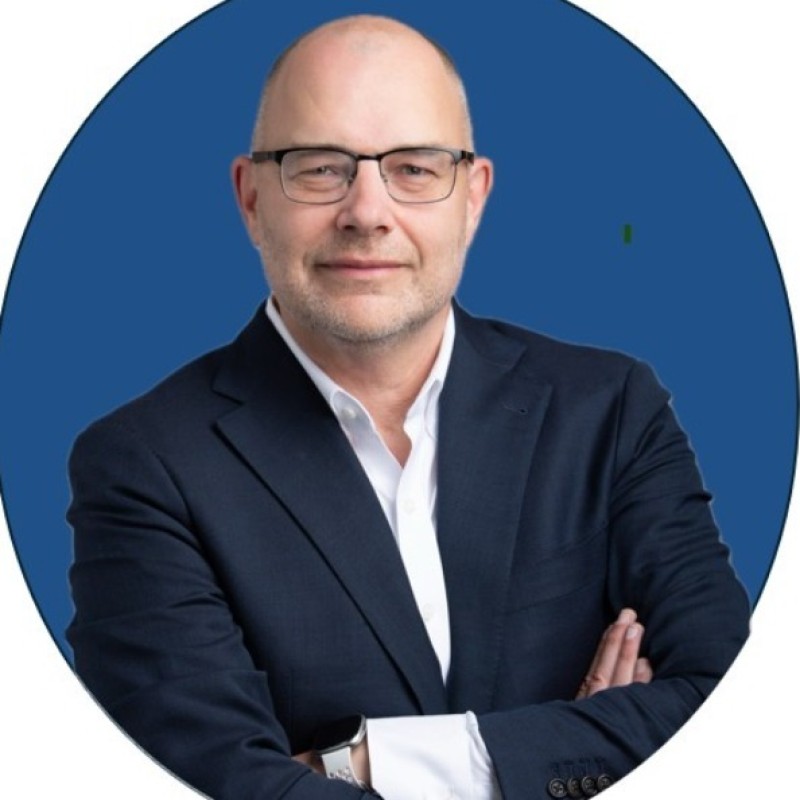
Brent Adamson
Brent Adamson is a world-renowned researcher, author, presenter, trainer, and advisor to B2B commercial executives around the world. He is the Co-Founder of both A to B Insight, a B2B sales and marketing research, advisory, and training company, as well as Co-Founder of Qoos, providing B2B sellers micro-guidance and AI-guided coaching, seamlessly embedded within HubSpot CRM.

Episode Transcript
Brent Adamson and Karl Schmidt
===
[00:00:00] Brent Adamson: I believe you've had amazing results for other companies, but we'll find some way to screw it up. 'cause we screw up everything 'cause we're just dysfunctional.
[00:00:05] Brent Adamson: That's a little bit dramatic, but what we find that companies will often believe your value in the abstract, but they won't believe your value for them in context. Not because they don't believe you, but because they they don't have confidence in their own ability to realize the value that you provide to others.
[00:00:19] Karl Schmidt: And that's the thing that there can be this, again, this silo challenge that's oh, that's on the partners like, and that's not really our problem. It's everybody's problem, right? If we don't help the customer overcome this, the deal doesn't happen, which hurts everybody. Including the customer if it really is the best decision for them.
[00:00:36] Chip Rodgers: As a partnership leader, are there different KPIs for customers that they should be thinking other than just pure revenue numbers?
[00:00:43] Karl Schmidt: Yeah I would argue
[00:00:48] Chip Rodgers: Hey everyone.
[00:00:48] Chip Rodgers: Welcome back to another episode of Inside Partnering Chip Rodgers here, and I am so excited to be joined by Brent Adamson and Karl Schmidt. Guys, welcome.
[00:00:58] Brent Adamson: Thank you, Chip. It's good [00:01:00] to be here. Yeah. Thanks
[00:01:00] Chip Rodgers: for having us. Yeah. So I, we've known Brent, you and I have known each other for quite a bit.
[00:01:05] Chip Rodgers: I guess. Going back to both of you were at Gartner for a number of years. Brent. Distinguished Vice President and Karl, you ran the practice around for originally CEB and then Gartner went, after the acquisition and now you're onto your own thing you guys have joined forces about a year and a half ago, something like that. That's for yep. A to B Insights and I think that's real. First of all, congratulations.
[00:01:34] Brent Adamson: Thank you. It's terrifying but super exciting. And, we've just put out a new book, which is what we're here talking about today. Chip called The Framemaking Sale. And that's the beginning of I, I think. A really interesting journey of in many ways, a continuation of what the kind of work, at least that we did back in the days at Corporate Executive Board for so many years of just trying to figure out what are the big ideas that we [00:02:00] should be thinking about, but probably aren't, at least not as much as we could be.
[00:02:02] Brent Adamson: And so that's our latest endeavor. Along those lines is captured in this new book.
[00:02:07] Chip Rodgers: I'm really excited about it too because I think back in 2011 when the Challenger Sale came out, man, what a hu it made a huge splash. Really, 'cause everything, I think before that had always been about relationship selling.
[00:02:20] Brent Adamson: Yeah.
[00:02:20] Chip Rodgers: And the Challenger Sale concept was very different. And it was all, what I loved about it is it was all very data based. It was based on data you were looking at. What are the results and how, and what are the differentiation between who's doing well and who's not doing well.
[00:02:37] Chip Rodgers: Maybe that's a good place to start. I think the Framemaker Sale is a, a. Progression of that. What, let's just talk about like why now? What's, what have you been seeing in the data that says, Hey, now is the time to to come out with a new book? And some new thoughts around sales process.
[00:02:57] Brent Adamson: Yeah, absolutely. Karl, why don't [00:03:00] you go do your take on this one.
[00:03:01] Karl Schmidt: Yeah, so the two things, there's really two, I don't wanna get too, I'll leave the drama to Brent. Generally he does such a better job. But but the two somewhat scary stats that really motivated us to go down this path are one the degree that even when a customer, is convinced of your value.
[00:03:22] Karl Schmidt: And is there saying Absolutely. If this was just up to me, I would certainly buy your solution. Even when they attest that you have the best answer, roughly somewhere between 40 to 60% of those deals are dying today to no decision. So you so much of what we had taught for so long, based on the Challenger and subsequent research about how you get that preference, how you help that customer really appreciate the value that can be that they can receive from partnering with you.
[00:03:49] Karl Schmidt: That just isn't it's necessary. It's just is proving insufficient. So it's the first thing that, that so many people have been getting the sense of, wait a second, there's some disturbance in the force. There's [00:04:00] something about the way people are buying that's changing, that means convincing them of the value is just no longer enough.
[00:04:07] Karl Schmidt: So that's the first, and I'll pause there. But that's the thing that, that really, if you and your organization isn't very clear on how many deals am I losing to no decision and why, and what's the nature of it? There's this risk you can find fall into the trap of just doubling down on the ROI calculator and the value and see saying they they're not buying 'cause they just don't appreciate the value and the customer's no, I appreciate the value.
[00:04:32] Karl Schmidt: It's something more or something else.
[00:04:36] Chip Rodgers: Yeah, I think it's interesting. I think it's it's about and I, I think the Framemaker, the concept of the Framemaker sale is about building the confidence
[00:04:46] Karl Schmidt: Yeah.
[00:04:46] Chip Rodgers: In the buyer. And so it's not just the mechanics, the ROI, the specific, the data.
[00:04:53] Chip Rodgers: It's about how does that translate into, Hey, I want, 'cause anybody that's a buyer is taking [00:05:00] a risk on you. They're putting their career at potentially at risk, or it could be a great, hopefully it's a great thing, but how do you get the buyer to say, Hey, I want to take that risk. I wanna champion you and, build the confidence within the whole organization to make the decision.
[00:05:19] Brent Adamson: So Chip, this is the second point that led us to write this book, which I think is so interesting is everything you just said is correct, but it's not what the book is about, which is, and I don't mean that in a snarky way at all. This is actually so counterintuitive and it's super interesting because you're a hundred percent right, your customer's taking a risk on you, right?
[00:05:35] Brent Adamson: And you wanna make sure they're confident. You however. There's this, so all of that is true. We'll stipulate to that right up front. But when we go back to the data and we look at the data that we first started generating as part of the team back at CEB and then Gartner trying to understand what drives a high quality, low regret purchase, a big purchase where the customer doesn't settle but buys the bigger solution and feels good about it at the same time.
[00:05:55] Brent Adamson: It's interesting in doing years of research against that question, looking at all sorts of different sales techniques and [00:06:00] marketing practices and buying group configurations. The single biggest driver of a high quality low regret deal, which let's just call it growth effectively, whether it's new customer acquisition or customer expansion, like the, if we're trying to think about how do we grow the business and we think what needs to happen in order to decrease the likelihood of growing the business, what we find is the single biggest driver of that kind of high quality low regret deal is the degree to which customers report a high degree of confidence
[00:06:23] Brent Adamson: in the purchase that they're making on behalf of their organization, which just sounds like the point you just made. And I think again, we all kinda stipulate like of course, if customers aren't confident in you, confident in your people, confident in your product, confident in your value.
[00:06:36] Brent Adamson: They're gonna choose to go somewhere else. But what's interesting is when you unpack this data that shows the single biggest driver of a high quality low regret deal is customer's confidence in the decisions that they make, when you strip it apart into a sort of aggregate into it's a synthetic metric made up of a series of sub metrics.
[00:06:53] Brent Adamson: And when you strip it apart and kinda look at all those individual metrics that make up that big finding, it turns out that all those sub attributes are things like. [00:07:00] As a buying group, how confident are we that we even asked the right question in the first place? How confident are we that we've done enough research?
[00:07:05] Brent Adamson: How confident are we that we've sufficiently, that we thoroughly looked at all the different alternatives? And there's a longer version of this, which Karl's poor. Karl's now heard me say a bazillion times, but the so I'll just jump to the punchline, which is when you unpack it, which you find is.
[00:07:18] Brent Adamson: Not a single one of these attributes that makes up this huge bar that drives growth for your company, has anything to do with you, the supplier at all. They're not only customer centric, they're actually supplier agnostic, and so the conclusion of that is. It remember the Yes. And it's yes, we need to make, yes, they're taking a risk on you, but they're also taking a risk irrespective of you.
[00:07:36] Brent Adamson: It's yes, they need to be confident in you, but they also need to be confident in themselves. And so the single biggest driver of high quality, low regret deal isn't whether, isn't based on whether or not customers are confident in you. It's whether customers are confident in themselves.
[00:07:47] Brent Adamson: And so that, that is for me is really the why now of the book beyond sort of what Karl mentioned was arguably. The more urgent context, which is we're all losing money to status quo. Yeah. But for me, it's almost like a, it's not a [00:08:00] philosophical question, it's a truly practical question, but it's a really interesting one, which is what does it mean to go to market?
[00:08:04] Brent Adamson: What does it mean to engage customers? What does it mean to en, en engage in a sales motion? In such a way that we're, that's specifically designed not to solve for customer's supplier perception, but to solve for customer's self perception. And that is something no one's ever talked about before, really to some, to, to a large degree and in a systematic way.
[00:08:23] Brent Adamson: And that's what the frame making sale really is all about, is what is our answer to that question.
[00:08:29] Chip Rodgers: So if I'm hearing that it's not just, Hey, am I making the right decision on the right vendor or the right partner to work with, but it's, should we be doing this at all? And Right. Yeah. Yeah.
[00:08:42] Chip Rodgers: And yeah and. And how confident am I? And today with so many, like things are changing so fast, AI has just accelerated timelines incredibly so everyone's nervous, right? Have I looked, have I done enough research? Have I looked at enough solutions? How, [00:09:00] what, given that's the problem, what's the, what is the Framemaker sale?
[00:09:06] Chip Rodgers: Maybe do give like a sort of elevator pitch of what the Framemaker Sale says to a a sales organization for how to, overcome that problem.
[00:09:18] Brent Adamson: So there's I'll lay out the context and then, and maybe Karl, you wanna dig into the details. So the reason why this confidence why it matters so much is because arguably, customer confidence, self-confidence has never been under the kind of pressure it is today.
[00:09:31] Brent Adamson: So there's, so we will get to the an, the answer is this idea of frame making and it follows a set of patterns, which Karl, I'll let you unpack in a second. But the interesting part of it, or the equally interesting part of it's, there's use cases. In other words, there's at least and in the book we, we identify four specific challenges that customers face across a buying journey that are undermining their confidence now.
[00:09:50] Brent Adamson: So one is decision complexity. It's who do we even have to get on board? How do we navigate our own internal processes when we go out and we talk to customers every day about their buying [00:10:00] experience. It's not oh God, buying from that supplier was awful. It's rather engaging my own colleagues in a buying decision was awful.
[00:10:05] Brent Adamson: It's they, I talked to a head of marketing once about her recent CRM purchase and asked her for one word to describe it, and her word was, I never want to do that again. And she said it wasn't the supplier. They were fine. It was just, I never want to go through that
[00:10:17] Brent Adamson: hell with my company because it's the committees, the decisions, the changing priorities, the budgeting, all of it's just awful. Decision, complexity, information overload, which today is 10 X, I made up the number 10 x, but this is a lot more, how about that, than it ever was with ai.
[00:10:31] Brent Adamson: So the, so decision, complexity, information overload, objective, misalignment. How do we get aligned on what we're even trying to do? And then outcome, uncertainty, which is, I believe you've had amazing results for other companies, but we'll find some way to screw it up. 'cause we screw up everything 'cause we're just dysfunctional.
[00:10:43] Brent Adamson: That's a little bit dramatic, but what we find that companies will often believe your value in the abstract, but they won't believe your value for them in context. Not because they don't believe you, but because they they don't have confidence in their own ability to realize the value that you provide to others. So within these different con, each one of those [00:11:00] is a recipe for just feeling overwhelmed, for feeling exhausted, for feeling resigned. And I think the thing that's really interesting to me, if you take, so I was talking to actually some, I was at Dreamforce last week with, this is where I saw you Chip, right?
[00:11:10] Brent Adamson: The I was talking to actually someone from Salesforce and I told him the story about this person who just bought a CRM system and said, I never wanna do that again. I said, and this is true. I said, I have no idea whether that CMO had just bought Salesforce or some other CRM system, but I said one, one or another.
[00:11:23] Brent Adamson: What's interesting is when your Salesforce, when your sales reps walk into that marketer's office and wanna have a conversation about the next purchase, you are going to pay the price. For their past pain, whether you are the cause of it or not. And I think that's what's so interesting is that when cust the predisposition of customers today is not I like you or I don't like you, which is how we always think about it.
[00:11:42] Brent Adamson: Or I see value in you. I don't see value in it. It's more like the predisposition is I just don't wanna do this anymore. It's just hard, frustrating, long, awful. And so somehow we've gotta find a way, or at least our opportunity as sellers, is to just. Just make it feel a little bit more doable, a little bit easier.
[00:11:58] Brent Adamson: Not that we're great or we're valuable, but [00:12:00] that decision is actually makeable.
[00:12:04] Chip Rodgers: I love that because that means that if you're able to do that, you're not only telling your story better Yeah. But you're actually helping your customer get through this painful process, better. That's right.
[00:12:18] Karl Schmidt: And that's exactly right, Chip, because at the core of everything we talk about with frame making.
[00:12:23] Karl Schmidt: Is this, we call it a mindset and it's just a different role for sales focused in the idea that we all in sales. Our job, our number one job has to be to help customers make the best decision they can in as little time as possible. Now both parts of that phrase are equally important. And I'll start with the first part is, again, we have to earn the time from our customers and our prospects, right?
[00:12:48] Karl Schmidt: And that's where so often, you see the second scary I mentioned two scary stats up front. The second was that roughly three quarters of B2B buyers would prefer a rep free experience if they [00:13:00] could. Not that they go down a rev free experience because they largely often can't for various logistical, practical reasons, but they could if they would, if they could.
[00:13:08] Karl Schmidt: And that just again, highlights the history and some of that scar tissue that Brent was referencing in terms of prior experiences. With sales folks that maybe didn't listen enough or maybe didn't really understand what the need was, and were just pushing speeds and feeds the natures of their solution rather than really trying to understand what the need was and how to help that customer actually overcome these things that Brent just laid out.
[00:13:31] Karl Schmidt: And so that this different role first earns that time from the customer as someone that can actually help overcome those four challenges as the first aspect of it. But beyond that, some of that may end with the unfortunate outcome, and we always get these questions like but brand or Karl, what if the help we provide is and determine the best decision for them actually isn't to buy from us?
[00:13:55] Karl Schmidt: How that doesn't really feel like winning. But the point there is the second half of [00:14:00] that that, that sentence, because it's the, in as little time as possible, is so critical to the mindset because we've heard from so many star sellers over the years, as well as the most progressive sales leaders, Hey, one of the things we need to do better is if we're gonna lose.
[00:14:14] Karl Schmidt: Let's lose more quickly, right? Let's not spend a year on this deal if it's ultimately not gonna work out. If the best answer is actually status quo, or they're not ready for us yet because they need to put these other things in place, let's sort that out right away so we can guide them to what maybe they need to do to be ready or whatever it might be.
[00:14:33] Karl Schmidt: But then if we're gonna lose, let's get in, get out, and then earn that trust and respect so the next time they have a need. We're the first people they contact because we were helpful when they were making that prior decision. And so it's that combination of aspects that we, that combine, make up this frame making mindset is really the core of everything we talk about in the book.
[00:14:54] Chip Rodgers: Interesting. Yeah. Who wants to spend, more time than you need on [00:15:00] coming up with a, a decision against you. It's okay, that was a waste of time.
[00:15:05] Brent Adamson: The worst place to finish. A second. That's exactly right. At the the, and so the idea of framing, making chip really is at the highest level.
[00:15:12] Brent Adamson: It's just how do I take them as big, hard, and overwhelming. Just make it feel a little easier, right? So to put a frame around it, so you think it's 50 things that are keeping you up at night and worrying, you say, oh my God, there's so much to worry about. There's so much content to read, there's so many steps.
[00:15:24] Brent Adamson: What if someone were to say, I know there's, feels like there's a lot of steps in working with other customers like you that we found is really these three that matter most, or these two pieces of information, or these four questions. And by the way, this third one, people tend to overlook a little bit, right?
[00:15:37] Brent Adamson: By the way, I just engaged in something called prompting and bounding, which is I bounded. So I took some of this big and overwhelming and put a boundary around it, so I bounded it, and it prompted you to think about something within that boundary. And what's really neat about this idea of framing or frame making, is it.
[00:15:51] Brent Adamson: If you think about a frame, so you've got a big problem and I just put a boundary around it so that you're still making a decision, but now you're making a decision within a chalked pitch or a chalked field. [00:16:00] But I'm still leaving you, the agency. That is the freedom to make your decisions within that frame such because if I'm solving, not for your confidence in me, but your confidence in you, then it's ultimately gotta be your decision.
[00:16:11] Brent Adamson: It's gotta be some. There's a good analogy. I was talking to Charlie Green a couple weeks ago. He's the author, one of the co-authors of Trusted Advisor back in the day, and he's really great guy. And and we were talking about these ideas and he said, it's kinda like a good therapist.
[00:16:24] Brent Adamson: And I, this is not the first time I've heard this, he said a good therapist doesn't tell the patient what to do. The good therapist sort of creates a framework, which in which a patient, within which a patient can make their own choices. Exercise or agency interesting decisions for themselves.
[00:16:37] Chip Rodgers: Yeah.
[00:16:37] Brent Adamson: And so when people hear that they, I thought we were talking about sales. What is this stuff? But it's actually what we're talking about is human interaction, right? What we're talking about is humans making really complicated decisions. And to Karl's point, it's it may be true that 75% of B2B buyers would prefer rep free experience.
[00:16:52] Brent Adamson: But I don't know that they prefer a human free experience. And that to me is really interesting is if, what if you could show up with just a little bit more. Human, a little bit more [00:17:00] humanity, a little bit more. Lemme just help you make a decision that's right for you. It just seems to be the posture that might make it worth a customer's time to actually have a conversation with you.
[00:17:09] Chip Rodgers: Yeah. So how so I like that. Thank you for for adding that, that context, because it does, it seems, it could seem a little bit like you're, hey, you're trying to. I don't know, this is a bad word, but manipulate the, which is not right. You're not, the idea is to, they're still making the decision, but you're putting them within, putting it and making it, simplifying it, right?
[00:17:30] Chip Rodgers: Yeah. Which is the challenge.
[00:17:32] Brent Adamson: Yeah. And in fact, it goes back to your original question, like the why now of this whole thing, right? Is the. People, I think sometimes, and they did with Challenger too. You remember this right? In 2011, and particularly it was first three or four years other than, hey, this doesn't feel new, which is the big criticism we got.
[00:17:47] Brent Adamson: It's my sales, my best people are doing this already. We'd always say, no, we know your best people are doing this already. 'cause we wouldn't have shown up in the data otherwise. But the but the big question
[00:17:53] Brent Adamson: everyone had. How do you get everybody else
[00:17:54] Chip Rodgers: to do it?
[00:17:55] Brent Adamson: That was always the question.
[00:17:56] Brent Adamson: That's the same question with frame making too, right? Yeah. With the but the other big question is like, [00:18:00] how do I get paid for this if I'm gonna go out and challenge customers to think differently about their business, and they take that idea and put it in RFP and put out the bid. And someone else, that's free consulting.
[00:18:08] Brent Adamson: So in, in the Challenger Body of Work our answer there is to make sure that whatever you challenge or teach your customers about their business leads back to your unique strengths, which is easy to say and turns out it's hard to do in some degree. That is absolute, that idea is still operate in operation or is still part of the story here in frame making.
[00:18:24] Brent Adamson: But that there's this bigger challenge or bigger story of framing too, which is simply. There's, it's a somewhat tongue in cheek comment, but it's absolutely true at the same time. So when I look at the data and B2B buyers struggling and all the things that are going on in the buying world, Chip it's amazing to me that commerce still happens at all.
[00:18:39] Brent Adamson: Do you know what I mean? It's like everyone's exhausted, everyone. Is resigned. Everyone thinks they work at the world's most dysfunctional company. I think everyone's probably right and it's like what do you do when the number one word that a customer thinks of not buying your solution but a solution like yours is, I never want to do that again.
[00:18:54] Brent Adamson: And I think our biggest competitor to Karl's earlier point is just status quo. So if we could just show up in a way that helps customers [00:19:00] make decisions, and we just get more decisions happening and just maintain our share of the pie. You'll wind up. That alone is sub is a way, is a, I think not only a practical, but a defensible means to drive growth.
[00:19:12] Brent Adamson: I think, however, on top of that, if you show up in this kind of way where your customers say, I wanna talk to Chip, because every time I talk to Chip, I feel a little bit better, but a little more confident about decisions we're making. I don't know if I'm gonna buy from Chip, but I wanna start with Chip.
[00:19:23] Brent Adamson: That is just putting yourself, it's kinda like getting ahead of the RFP, right? It's putting yourself in the pole position. Of winning the right to have the right kinds of conversation with your customer. 'cause you're up first because you showed up in the way that they actually wanna interact with.
[00:19:36] Chip Rodgers: Yeah. Yeah. I love that. Love that. Brent. A lot of our audience listeners are in partnership roles and Yeah. You're still in sales, right? You're still, trying to drive growth. The whole, that's the whole reason for partners is to, yep. Build your influence, grow, a better solution, better story, better together story, right?
[00:19:58] Chip Rodgers: Where you've got either [00:20:00] another. If you've got a solution, you've got another ISV that's maybe got something that works together, you're integrated and you've got a great story together, or a service provider or a cloud provider or whatever.
[00:20:11] Brent Adamson: Yeah.
[00:20:12] Chip Rodgers: How, what's put this in the context of a partner person and how would, how does it work?
[00:20:17] Chip Rodgers: That way you're co-selling, you're co-marketing, co-selling, all those things.
[00:20:20] Brent Adamson: Oh, it's such a great question and I'm super excited to, to continue to explore the partner world with you Chip and Asher and others around this, because and. By the way, it looks like we, I dunno if Karl had a power outage or not, but he's vanished.
[00:20:29] Brent Adamson: So I, from what is, I was doing a podcast with April Dunford last week. 'cause she vanished right in the middle. It turned out she had a power outage. So I don't know if that's got Karl with you. But anyway, so I so I'll do this in Karl's voice. But the partner world is so interesting, right?
[00:20:42] Brent Adamson: Because the whole idea of a partner. It's not unlike the original value proposition of solution selling, right? Which is one plus one equals three. So we got our capabilities and their capabilities and we put 'em together. It's like Wonder Twins activate, and I can offer, this greater, the sum is greater than the total is greater than the sum of the individual parts.
[00:20:57] Brent Adamson: I think you said the right, but anyway but I think from a [00:21:00] customer's perspective it's a little bit different, which is. Oh God, it was hard enough working with one company and I have to work with two, or I wanted this small solution, I gotta have this bigger solution. And now, like how does all it, so I think that it's not that customers aren't going to see the value in that, but they're going to, if they're already predisposed to feeling exhausted, confused, overwhelmed, and just anxious, it's oh God, I don't wanna do that again.
[00:21:21] Brent Adamson: Oh, now there's two of them selling to me. You know what I mean? It's I think the, and Karl's back. Sweet. So the, I think the opportunity here in the partner world is. How do I think it's, whether it's one person on behalf of the entire partnership or it's the partners together, I think to collectively show up to the customer with this posture of.
[00:21:41] Brent Adamson: I, I think, wait, let me back up Half a step. I think in a partner world, the posture is largely gonna be, let's show up and show them how our combined value is greater than our individual value. And I think in a partner world, I think equally as important to be that let's show up and show them how our combined effort together is gonna make their life easier, not harder.
[00:21:58] Brent Adamson: So how do we help them? [00:22:00] Like you should feel, it's hard enough to get someone to feel confident in your solution, but now in a partner world, it's now I gotta show up and get 'em confident in both our solutions and the collective aggregate value of our combined solution. So I think the gravitational pull back to supplier centric posture and supplier centric language is even stronger in the partner network for a lot of us, just naturally.
[00:22:19] Brent Adamson: And so I think it's just that much more important in a sale, that purchase that's arguably also. More complex because I have to buy from multiple companies perhaps, or at least have to engage with multiple companies that we lean even harder into. Let me help you think through how this is going to be, how, what are the steps of the decision?
[00:22:39] Brent Adamson: What's the information that matters most? How do I help you align on your objectives? How do I make sure that you're ready to realize the value of this and understand? What are the things that are going to make a here's a, it's a great moment of empathy. I'm rambling now just 'cause I find this super interesting.
[00:22:51] Brent Adamson: But one quick thought on this, which is I think it'd be really good for partner sellers to sit down and ask themselves and maybe literally ask customers, quite literally ask customers, [00:23:00] what is it about this kind of motion this relationship that makes you most concerned? What are your concerns?
[00:23:07] Brent Adamson: Not about our product, our features, our benefits, but what are. What are your concerns about buying in this kind of context where you're working with partners? What's, what makes it harder to make decisions? What makes you feel like you're, it's going to be more difficult to get it past your organization?
[00:23:21] Brent Adamson: Where are you gonna run into roadblocks and then help them navigate those? And if you're not, and ideally you can even predict them in ways that they can't. So in working with customers who've already made this purchase and made it successfully, ask 'em if you had to do it all in buying from us and our partner, if you had to do it all over again, what would you do to.
[00:23:39] Brent Adamson: Make it easier. What would you do to, what recommendations would you give to other companies about to buy from a, sort of partnership like this? And whatever you hear is an incredibly valuable nugget of advice and guidance and coaching that you could provide to future customers. Karl, we assumed your power went out.
[00:23:54] Brent Adamson: But I'm glad to see you're back. So the
[00:23:56] Karl Schmidt: No, it was funny. I was texting you to see if it was just me and [00:24:00] it was just you. It was just me. But it's I'm glad you're able to continue the conversation. Yeah. Because I, I think the, where I sense you've headed to is exactly where I was gonna take it from the mindset point, which is so much of trying to help that customer make the decision to overcome these challenges requires a real and we've, everyone's talked about customer intimacy for
[00:24:21] Karl Schmidt: ever. But in this world of trying to help increase a customer's confidence in themselves and the challenges they face, it is so critical to have that that, that closeness to the customer to really understand well, where are they likely to struggle? What have, where have customers like them hit potholes along the way.
[00:24:42] Karl Schmidt: And this is where it's so critical, especially when it's a partner type situation, to make sure there is that sharing of intel. Because again, you as a, as the suppliers, we have a real asymmetry of information advantage, right? Because we get to see many customers try and navigate these [00:25:00] journeys and by comparing notes, by sharing all of the things we've seen, all the places where people have maybe taken a wrong turn or needed to have this thing in place before they progressed too far.
[00:25:10] Karl Schmidt: That ability to combine that across the organizations just it, it's a multiplier effect in terms of the type of help that we can give those customers. Assuming we're actually investing the time and energy with our partners to actually get that right. Yep. And that's the step that so often when I've talked to people, and this is more when we're talking through a distribution partner or something that's more about getting the thing to market that will say I don't really know what's going on with my customer.
[00:25:34] Karl Schmidt: My channel partner handles all that. I'm like that might be your biggest mistake, because if you don't have access to those insights as to where the customer's struggling, then how can you. How can you ever hope to help them overcome those things and actually land those bigger deals?
[00:25:51] Chip Rodgers: That's great. That's great. It's and I think, if I kind of paraphrase, it's we, you we're talking about the sort of the frame making right of building a [00:26:00] frame within which to make to make a decision. Now in if you're working with partners, you still have a frame to set, but it's gonna include.
[00:26:08] Chip Rodgers: Yeah, the partner or partners that are a part of that solution to help simplify the decision.
[00:26:16] Brent Adamson: Yeah, so on that point, so let me, I don't wanna go through all of 'em, probably take too long and be too boring, at least on a podcast. But I think it'd be really valuable to do as a one-off, going forward with your team, with one's team, but take 'em one at a time.
[00:26:27] Brent Adamson: So again decision complexity, information overload, objective misalignment, and outcome uncertainty. And I think just take, let's just do one, which is, decision complexity. I think it'd be interesting to sit down with a partner and ask em and for that partner group to ask themselves, okay, when a customer buys from a, an aggregate provider as opposed to an individual provider partner group, what are the additional questions that might come up in inside their own organization with procurement, with legal, with data protection that might not have come up otherwise?
[00:26:56] Brent Adamson: And how can we begin to coach or guide. Could be their Sherpa through those [00:27:00] questions such that it becomes easier for them to navigate their own internal complexity. You get the same thing on information as they begin to. As they begin to, gather information and do their own due diligence, that is the customer.
[00:27:10] Brent Adamson: And they start looking at different providers and different partners that's gonna raise all sorts of different questions about integration and collaboration and cooperation, right? And all that kind of stuff. It's so now, so where they were already overwhelmed and now I'm starting to think like this.
[00:27:22] Brent Adamson: Now I'm totally overwhelmed. So how can those partner sellers go to market together and have, holding hands on, when buying in this kind of motion with a partner in the near bound sort of way? How do I. Here, the, here are the two or three questions that may not have been in your radar screen that you're really gonna wanna think through.
[00:27:37] Brent Adamson: And here's a little bit of information to kinda help you think through that, whether it's from us or from someone else. And by the way, there's two things that you're gonna run into that frankly aren't as relevant as you might've thought, but you're gonna, so it, the whole thing, kind of frame making.
[00:27:49] Brent Adamson: Because Karl and I are wonky that way, so we picked a wonky term, but I think it's a really accurate term. This idea of framing is picked very purposefully because I think it's exactly right for what we're trying to convey. But if you wanted just a simple basic term, it'd be coaching, [00:28:00] right?
[00:28:00] Brent Adamson: How can I become my buyer's decision coach? How can I help guide them through the decision? Complexity such that they feel like, no, we can do this. We can make this decision. Or therapist works. Yep. Or therapist. That's right. Yeah. We
[00:28:12] Karl Schmidt: hear all the time that when, as we're doing the workshops in particular, it's like, it sounds like marriage counseling.
[00:28:18] Karl Schmidt: Do you guys do that too? I'm like no, not exactly.
[00:28:23] Chip Rodgers: Don't wanna touch. Thank you. I'm curious how this as a sales leader or a partnership leader, who's responsible for numbers. What's the impact? How should they, how do they need to be thinking about it? What are there different, are there organizational impacts or are there different KPIs that you've, are thinking through or recommending for for customers that they should be thinking other than just pure revenue numbers?
[00:28:51] Brent Adamson: Karl, you wanna take a crack on that one or otherwise?
[00:28:53] Karl Schmidt: Yeah I would argue it, it gets back to the point I was just making, which is this aspect of how you get the customer intimacy. [00:29:00] How you get that real understanding of, from a win-loss perspective and beyond the wins and the losses.
[00:29:06] Karl Schmidt: It's those deals that are trapped in no decision month after month, quarter after quarter. That just drag on. It's really making sure that those aren't just discounted appropriately to have your forecast be a little more accurate. It's to really understand the why. And that's where if you don't have that process in place between the various partners is, all right these are the ones that, based on everything we know this should be a good deal.
[00:29:34] Karl Schmidt: This should be something that's a big win for the customer. And really investing the time collectively to understand where are they stuck? What's the nature of it? Is it a question that they haven't gotten, been able to answer? Is it a question they didn't? Thing to ask, like where is their process getting hung up?
[00:29:55] Karl Schmidt: And that's the thing that there can be this, again, this silo challenge [00:30:00] that's oh, that's on the partners like, and that's not really our problem. It's everybody's problem, right? If we don't help the customer overcome this, the deal doesn't happen, which hurts everybody. Including the customer if it really is the best decision for them.
[00:30:12] Karl Schmidt: And so that aspect of making sure that from A-A-K-P-I perspective, it's really a way of working, right? It's this common mindset of helping the customer make the best decision and helping them avoid and overcome any hurdles along the way.
[00:30:26] Brent Adamson: Yeah. So the outcome metrics Chip that, you know and we're not quite at the position with companies doing this in a very formal way that we can say here's, here's what others are seeing.
[00:30:34] Brent Adamson: But the metrics you'd wanna look at would be deal velocity. It would be, the ratio of one closed closed won, or closed, lost, I stalled. So words like definitive answer versus. Stalled and then won versus stalled. Deal quality. If you go back and think about what I mentioned earlier, all of this is based off of research around a high quality, low regret deal.
[00:30:53] Brent Adamson: So you'd wanna see a deal quality that is the size, the scope, the margins, the that's likely gonna go up. And then also there's a sentiment aspect. [00:31:00] So high quality, low regret. So do customers feel buyer's remorse versus are they excited about what they bought and excited to work with you going forward?
[00:31:06] Brent Adamson: So there's a number of dimensions along which. So deal size, deal quality, cycle time, and customer sentiment. I think we be all things that you're gonna wanna look at to measure the impact. And then I think re repeat business or return business it's, we don't really have a metric in our CRM system for the customer says we're the first one that they call when they have a problem.
[00:31:25] Brent Adamson: But I think that's the kind of sentiment that you'd wanna watch for as well.
[00:31:29] Chip Rodgers: Yeah. It's like an experience kind of
[00:31:32] Brent Adamson: thing, right? That's exactly right. Yeah. Yeah. Yeah. Terrific. It's really interesting when you think about to, to me it all comes back to this very high level idea, but I think it's a really powerful one because it's powerful not just in sales, but like friendships and marriages and dating and everything else.
[00:31:47] Brent Adamson: It's just human relations, which is
[00:31:48] Brent Adamson: what if we were to interact with people such that our main priority in interacting with them was to leave them feeling a little bit better, not about us, but to leave them feeling a little bit better about themselves. And [00:32:00] broadly speaking, me. 'cause I'm a died in the wall, humanist.
[00:32:02] Brent Adamson: I think that's just a kind of a nice world to live in and a good one. But it turns out we've got bar charts to show that's actually a better way to make more money too. So it's neat to see that as I like say, Karl's heard me say before, I don't know that there's ever been a time we're doing what's right for sales and doing what's right for just being a better.
[00:32:17] Brent Adamson: Human or better for humanity have been more aligned than they are today, which I think is, that's to me the real why now of the frame making sale.
[00:32:26] Chip Rodgers: I love it. You guys are on a mission. We are. That's right. Yeah. Seriously. It's yeah it's it's putting it into a human context and and really making, just making the experience better and having the relationship better and having.
[00:32:41] Chip Rodgers: The customer feel better about their decision and really, coming up with something that's that's valuable for the company and for the customer. Agreed. Yeah. Cool. Terrific. Gosh, this has been fantastic guys. I really appreciate you spending some time and talking about the new book.
[00:32:58] Chip Rodgers: And congrats on [00:33:00] the Thank you. On the launch it's about a month. You're about a month. Month and a half in, into it.
[00:33:05] Brent Adamson: That's right. Yeah. The book is The Frame Making Sale. You can find it, the frame making sale.com or if you wanna leave off the, that works too. Framing making sale.com. Karl Lesso because because he's shy.
[00:33:14] Brent Adamson: No, but I spent a lot of my time on LinkedIn and Karl's brent can do that bit. So the divide, conquer,
[00:33:20] Karl Schmidt: divide, conquer. Yeah. We're dividing, conquering. But but we're both
[00:33:23] Brent Adamson: on LinkedIn. I'm very active on LinkedIn. And the name of our company, for those who are challenger aficionados out there they'll understand.
[00:33:29] Brent Adamson: But the name of our company is A to B insight. There's a little reference back to what we really tried to do is break down a's and build up b's. And if you have no idea what I'm talking about, that's in the challenge a customer.
[00:33:38] Chip Rodgers: But yeah, I love it. I love it. And I'll put the, I'll put the link in the show notes as well.
[00:33:42] Chip Rodgers: So thanks Chip guys. Thank you guys. Really appreciate it. And and this has been really insightful and I hope valuable for all of our listeners as well. Agreed. Thanks. It was a pleasure. Yep. Thank you. Thank you guys. And and thank you all for joining another episode of Inside [00:34:00] Partnering and we will see you next time.
[00:34:01] Chip Rodgers: Thanks everybody.

Chip Rodgers
🚀 CMO | Chief Partner Officer | B2B SaaS Growth & GTM Leader | Ecosystem Strategy | Demand Gen | Podcast Host 🎙


.png)